
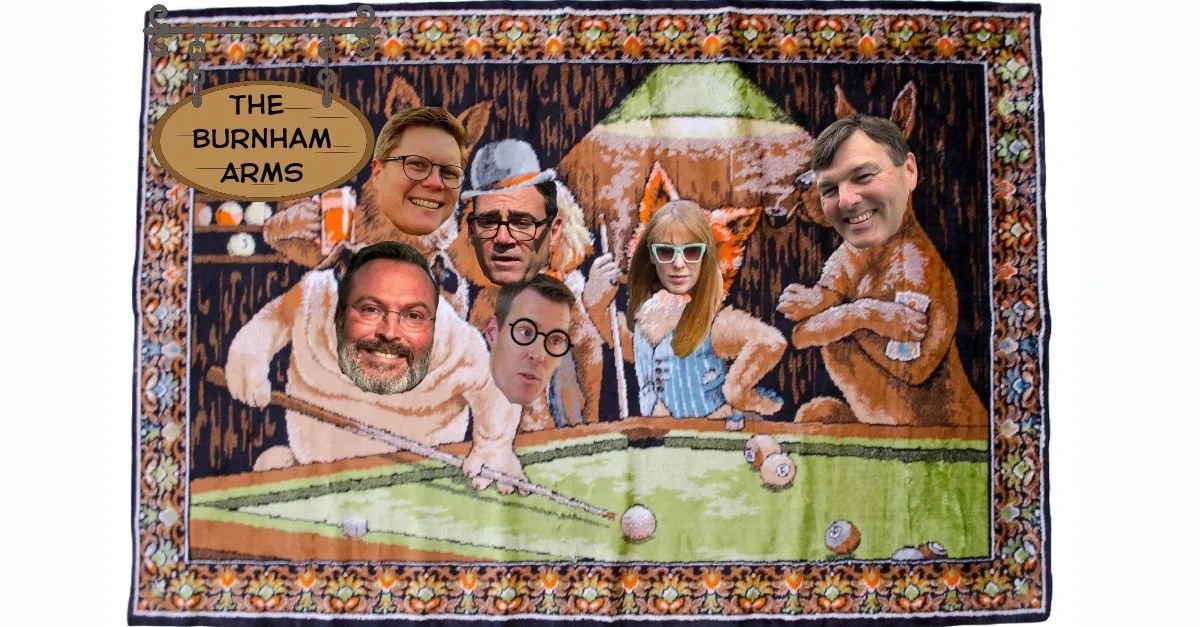
DUNCAN: Great to be in the Burnham Arms, very good bar snacks in here and these pints of Pennycook Pilsners are going down a treat! Now I was telling you about how things are changing in the world of planning, the making of Local Plans, the role of councillors and committees, early consultation with communities, and what happens when a Council doesn’t make a Local Plan.
HENRY: Surely making plans is a Councillor’s favourite thing? Why does it take some Councils ten years to produce a Local Plan?
DUNCAN: Well, it won’t take that long anymore. The new Local Plan system is designed around a 30-month preparation timetable, starting from the first formal gateway.
HENRY: Thirty months? Some Councils struggle to decide what to have for lunch in that time.
DUNCAN: Chicken sandwich. Always a chicken sandwich, Henry. The new approach is intended to be faster, more standardised and supported by clearer national requirements.
HENRY: And what happens if they miss the deadline?
DUNCAN: This is when Minister Pennycook wields his big stick (also known as “stronger monitoring and intervention arrangements”). The Government wants councils preparing and maintaining up-to-date plans, rather than letting them drift indefinitely. It is plan-led development after all.
HENRY: So, every Council has to start a new plan tomorrow?
DUNCAN: No. There are transitional arrangements. Some Councils are completing plans under the existing system, while others are moving into the new one. But the direction is clear: plans are supposed to be prepared much more quickly and kept up to date.
HENRY: So, we're moving from endless debates about whether to have a plan to an expectation that councils will actually get on with producing one?
DUNCAN: Precisely. A planning committee without a Local Plan is like a vegetarian pork scratching – pointless and nobody knows why they exist.
HENRY: Have a packet of dry roasted Rayners Peanuts to get rid of that awful taste. Speaking of planning committees, where do they fit into this? I know of cases where a developer spends years on consultation, examination and political arguments to allocate a housing site, only for councillors to refuse it when an application comes to committee.
DUNCAN: Well, that’s going to change. The revised NPPF makes it clear that proposals complying with an up-to-date development plan and national decision-making policies should be approved without delay.
HENRY: So once the principle of development has been established in the plan, you shouldn't have to fight the same battle all over again?
DUNCAN: That's the intention. The focus should shift towards getting the details right: design, infrastructure, access, environmental impacts and the delivery of affordable housing.
HENRY: But local objections can still be considered?
DUNCAN: Of course. Planning applications still need to be assessed properly. But objections should be based on relevant planning considerations, not simply reopen the principle of development that has already been established. Also, the new NPPF separates policies for preparing plans from national decision-making policies – which means greater consistency. National policies establish clearer expectations for assessing planning applications, so councils shouldn't need to reinvent the same development management rules in every Local Plan.
HENRY: In other words, the Local Plan concentrates on what should happen locally, while national policy handles more of the common planning rules?
DUNCAN: You’ve hit the nail on the head. Can you pass the Monster Munch over? Here’s another thing that’s changing planning committees have a new role.
HENRY: Cheese and ham roll?
DUNCAN: Chicken, Henry – always chicken. The national scheme of delegation just about to come in will set clear rules for which planning decisions are handled by professional officers and which go to committee. The majority ofapplications are dealt with by officers under delegated powers already. But the reforms will standardise those arrangements more, to reduce unnecessary committee involvement in decisions that should be straightforward.
HENRY: What about controversial applications?
DUNCAN: If you have a small scheme, then you won’t go to planning committee no matter how controversial… But the reality is that most applications will still go to planning committees, particularly where the national scheme says they could potentially – they almost certainly will. But controversy alone doesn't necessarily mean an application should be decided by councillors.
HENRY: That will take some getting used to.
DUNCAN: Like vegan scratchings. The underlying argument is that elected members should have a substantial influence over the Local Plans establishing where development takes place, rather than repeatedly reconsidering the principle through individual applications. They get their arguments in early, rather than leaving it to the very last minute when everyone has spent thousands of hours and millions of quid working on a planning application – including council planning officers who sometimes get very frustrated at Councillor decisions.
HENRY: So more political involvement in making the plan, and less opportunity to undermine it afterwards?
DUNCAN: That's certainly the intention. Councillors still have important responsibilities in planning decision-making. Let’s move on to the Carpenters Arms for a pint of PINS Cider, and I’ll tell you about how communities and the public can get involved earlier, and how this should lead to more of the right homes in the right places.
HENRY: I see they are advertising those nice inexpensive Eastern European beers may be coming back on 20 November.
DUNCAN: Yes, I saw that… I can’t wait!
HENRY: Mind you, I hear the Burham Arms may be up for having their license renewed later this year…
DUNCAN: Yes, it’s a nice little place. We must support them in every way we can.
Henry & Duncan
Henry – henry@theccp.net – 07736 121 014
Duncan – duncan@theccp.net – 07721 419 546