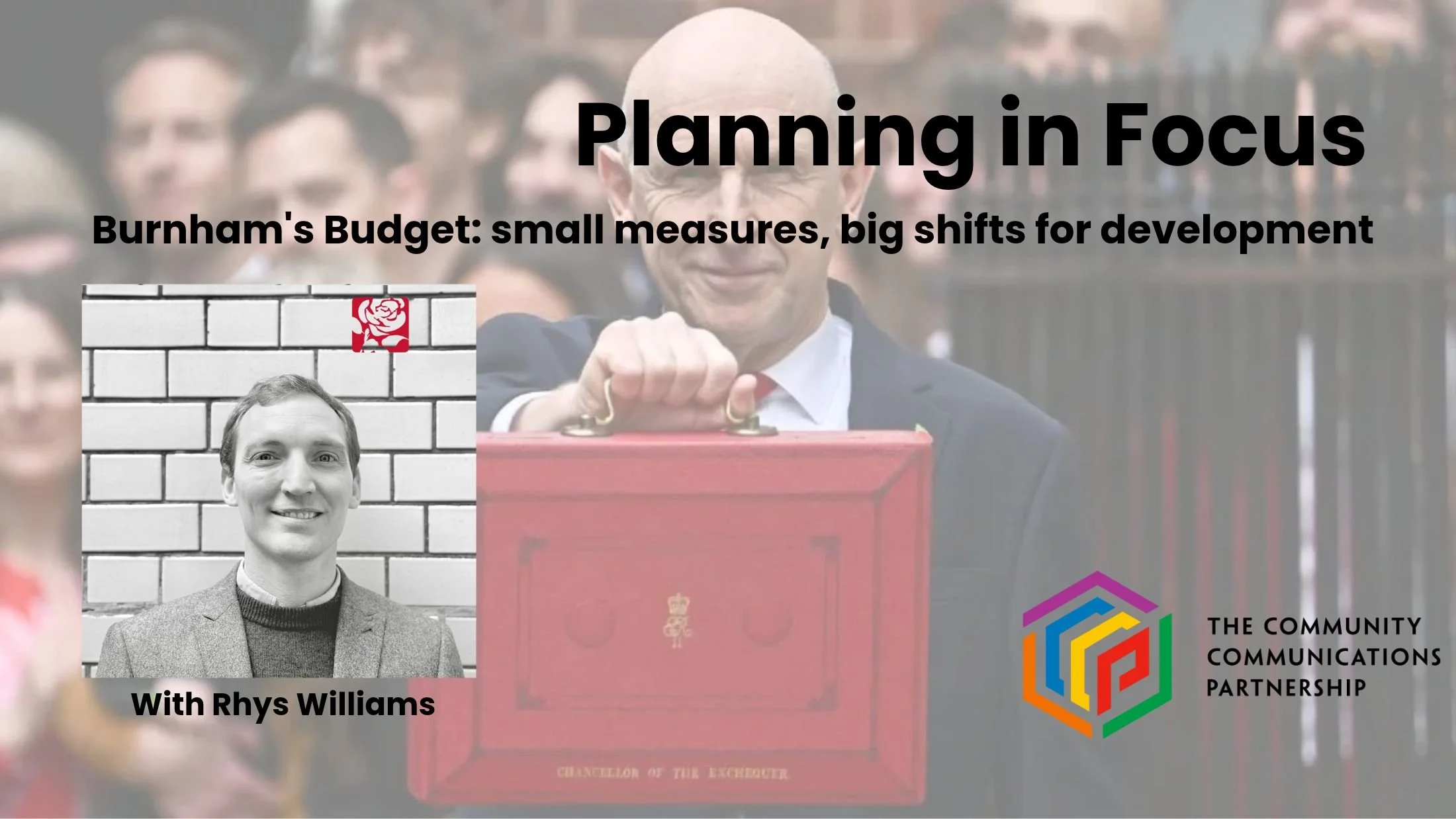
The first Budget of the Burnham premiership was, in many respects, a 'small' Budget. With the big decisions on welfare and defence deferred until next year's Spending Review, Chancellor John Healey delivered a smorgasbord of over 90 ‘micro-measures’, designed to offer some immediate cost-of-living breathing space.
But beneath the small measures were two significant shifts that developers and housebuilders should pay close attention to.
1. The balance of power is shifting towards Mayors.
Fiscal devolution was arguably the most significant structural announcement of the Budget.
From 2027, Mayors will receive a 20% share of business rates revenues, with 100% of business rates retained by local and regional government by the end of the decade. From 2028, Mayors will also receive a share of income tax revenues, alongside access to a £1.5bn borrowing facility and new powers to introduce visitor levies.
This is central to Burnham's vision of growth in every postcode, driven by empowered regional leaders with greater freedom from Whitehall.
For developers, the message is clear: understand the new regional political landscape. Mayors are becoming increasingly important players in unlocking growth, infrastructure and regeneration.
2. The Government is finally acknowledging the viability crunch.
There were welcome announcements for housebuilding: an additional £1.5bn for affordable housing, the £4.7bn Your First Home scheme, £700m for strategic development sites and VAT relief on land sales to social housing providers.
But perhaps more significant is what the Budget signals about the Government's thinking.
The Chancellor has committed to exempting smaller brownfield residential developments from Biodiversity Net Gain requirements and avoiding major changes to building regulations for the remainder of this Parliament, except where required for building safety.
Meanwhile, the OBR has downgraded its housing forecasts by 190,000 homes, explicitly recognising that rising regulatory burdens, alongside borrowing and construction costs, are undermining viability.
Planning reform alone will not deliver the homes we need if developments simply don't stack up financially.
This is a welcome departure from the simplistic narrative that developers are simply choosing not to build. Government is recognising that the cumulative burden of regulation and policy obligations is part of the problem.
There is a long way to go, but this recognition is important.
So, two takeaways for housebuilders:
Engage with government. Ministers are listening to concerns about viability and demonstrating a willingness to act. Now is the time to make the case for further practical reforms that will unlock delivery.
Don’t ignore devolution and get to know your Mayors. Understand the regional geographies, priorities and relationships. Greater fiscal powers are about to make Mayors key drivers for growth and development.
At The CCP, our team of current and former politicians helps developers navigate this changing political landscape, communicate effectively and build constructive relationships with decision-makers in Whitehall, City Hall and local government.
If you want to understand what these changes mean for your development strategy, we'd be delighted to talk.