Developers Don't Have a Planning Problem. They Have a Communications Problem
The development sector has never been more important, or so misunderstood or so demonised.
After all, the country needs new homes. We need renewable energy infrastructure. We need modern employment space, flood resilience, better transport, schools, healthcare investment and biodiversity improvements.
The development sector delivers all of these.
Yet ask many people what they think of developers and you'll often hear the same words: profit, overdevelopment, congestion, unsustainable.
Somewhere between what developers deliver and what communities perceive, the message is getting lost.
Good development isn't enough
Planning professionals spend enormous amounts of time perfecting transport assessments, ecological surveys, viability reports and design codes.
But the public rarely reads them.
Instead, they hear snippets on Facebook. They read campaign leaflets. They attend a public meeting where the loudest voices dominate. They see a planning application reduced to a simplistic headline.
The benefits are technical.
The objections are emotional.
Guess which travels further?
The industry often assumes that because a scheme is objectively good, people will eventually recognise that. Unfortunately, planning doesn't work that way.
The politics of planning
Planning has become increasingly political.
Councillors aren't simply weighing planning policy. They're balancing local opinion, community relationships and electoral pressure.
Developers therefore face three significant challenges:
Poor public perception.
Highly organised opposition.
Increasing political sensitivity around growth.
Many planning teams acknowledge these realities but still approach communications as something that happens once the application is submitted.
By then, positions have often hardened.
Winning trust before winning permission
The most successful projects don't just communicate better.
They communicate earlier.
They explain not only what is being proposed, but why.
They engage with politicians before misconceptions take hold.
They identify genuine supporters within communities who are often drowned out by the loudest objectors.
They understand that consultation is not simply a statutory exercise. It's an opportunity to build credibility.
Most importantly, they recognise that communications isn't about spinning bad schemes into good ones.
It's about making sure good schemes aren't misunderstood.
A different approach
At The Community Communications Partnership, we've built our approach around this principle.
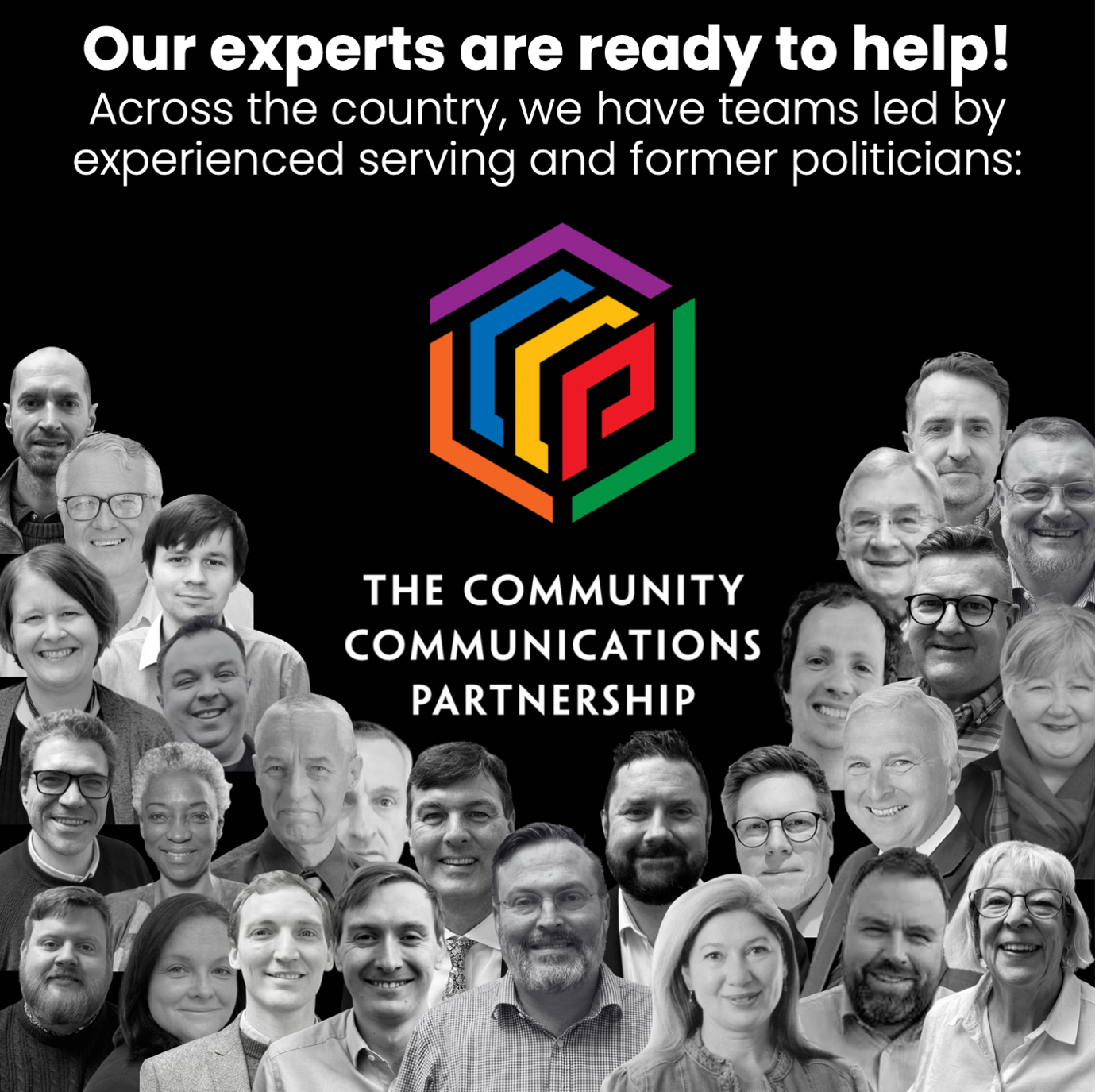
Our teams, led by experienced serving and former politicians from across the political spectrum, help clients navigate the reality of modern planning by:
challenging myths and misinformation about planning and development
building constructive relationships with political stakeholders
delivering meaningful public consultation that identifies genuine community support rather than simply amplifying opposition
This isn't theoretical.
Our clients tell us we've helped identify political risks early, foster stronger relationships with elected members and successfully support applications that faced significant local opposition.
The industry needs to change the conversation
The planning system will always involve competing interests.
Not every proposal will be welcomed.
But if the development industry continues allowing others to define its story, it shouldn't be surprised when public perception remains stubbornly negative.
Developers create places where people live, work, learn and thrive.
That story deserves to be told with the same professionalism and care that goes into designing the developments themselves.
Because in today's planning environment, communications is no longer a nice-to-have.
It's part of the planning strategy.
If your next project depends not only on good planning but also on political understanding, community trust and effective stakeholder engagement, I'd be delighted to have a conversation about how The Community Communications Partnership can help.